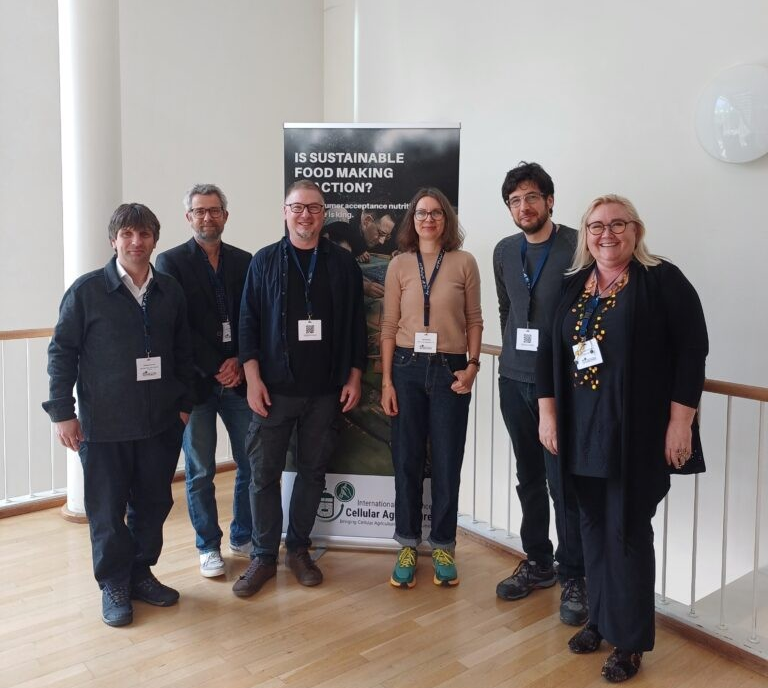
A number of FEASTS consortium members attended the 2nd International Conference on Cellular Agriculture, hosted by Aarhus University, which is also a project partner.
Posted on 21 Jun 2024
Two days of presentations covered a variety of topics related to technological challenges and solutions at lab level as well as approaches to scaling up production. Participants addressed topics of sustainability, regulatory compliance, ethics and consumer perceptions. The conference was also a fantastic opportunity to share information with attendees about the FEASTS project and our objectives.
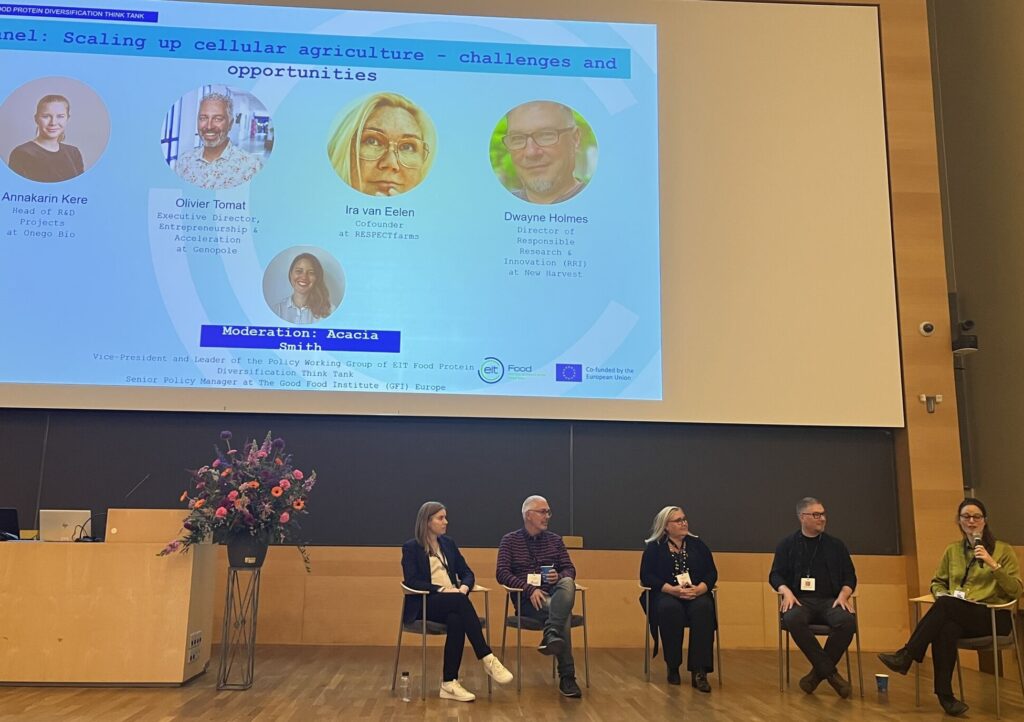
Panel discussion featuring FEASTS partners
A timely and pertinent debate unfolded during a panel discussion devoted to scaling up cellular agriculture which was held by the EIT Food Protein Diversification Think Tank. FEASTS Executive Director Dwayne Holmes and Ira van Eelen from RESPECTfarms, another project partner, took part in the conversation. The takeaway from the discussion is that the true challenge and at the same time opportunity lies in promoting transparency, embracing open science and making stakeholders such as farmers part of the conversation about the future of the food system.
Chefs on cell-based food
Prof. Barbara Vad Andersen from Aarhus University, who is contributing to FEASTS WP 4, shared insights from a workshop and survey among kitchen professionals on acceptance of cell-based food. It found that transparency about its properties along with safety and taste are the key to acceptance among this group.
About the 2nd International Conference on Cellular Agriculture
The event gathered top experts and actors in the field of cellular agriculture for food production to share the latest research results and industry news and facilitate a network for new partnerships and ideas. The event aims to also share information with decision-makers and stakeholders, especially in the EU. The focus of this year’s conference was Bringing Cellular Agriculture to the Consumer.
The conference covered the following fields: microbial and algal biomass, cultivated meat and plant cell cultures, precision fermentation to produce proteins, lipids and other food ingredients, and related fields covering sustainability and regulatory aspects.