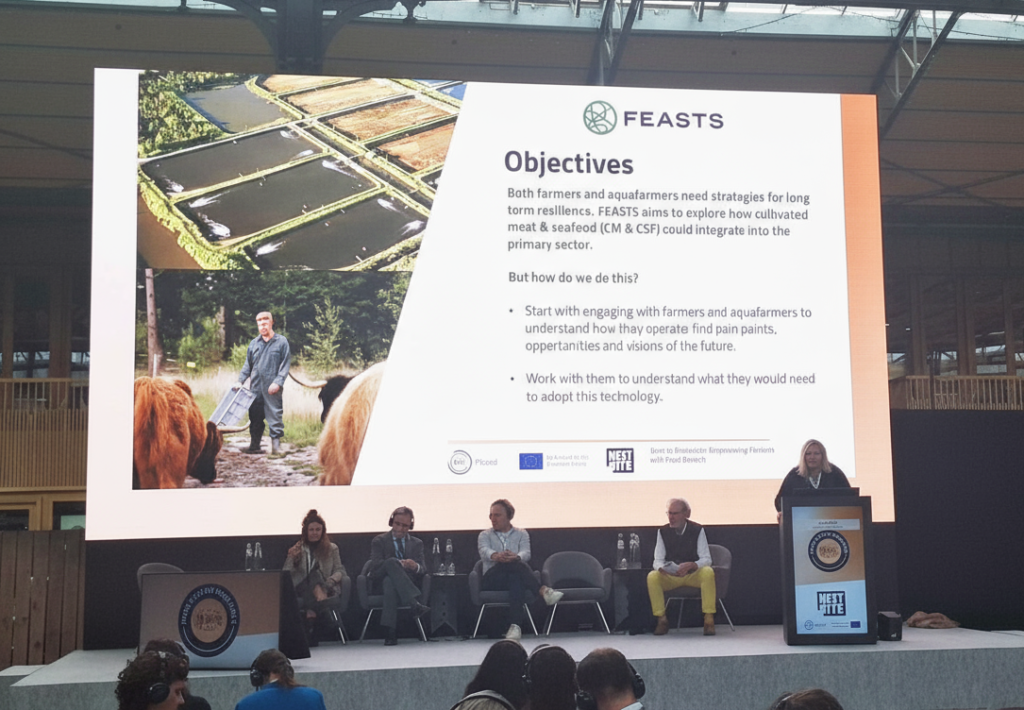
The FEASTS Next Bite session provided a nuanced discussion about the potential integration of farmers and aquafarmers into a future where cultured meat and seafood is part of the food system. This transition must be collaborative and truly beneficial for primary producers, not just cultured meat companies or consumers.
Farmers: Agents of Change
Our panelists, Ira Van Eelen, RespectFarms, Ruud Zanders, Kipster, Anna Niero, Ecoinnovazione and Luigi Tozzi, SAFE Food Advocacy Europe, in a session moderated by Kevin Camphuis of Shakeup Factory, highlighted the role of farmers as indispensable agents of change within this transition. Rather than relying on strategies imposed from outside, it is essential to involve farmers directly in shaping the future of cultured meat production. The complexity of our current food system means that only by listening to farmers and aquafarmers, understanding their specific limitations, pressures, and regulatory challenges, can we design and co-create practical, long-lasting models and transition scenarios.
Inclusive conversations
Excluding today’s crop, livestock producers and aquafarmers from the discussion around cultured meat and seafood is a mistake. Farmers and aquaculture producers are positioned as natural hubs for future protein systems due to their expertise, existing infrastructure, and market relationships. Incorporating cultured meat technologies should not be a challenge, but an opportunity for powerful collaboration across sectors.
Barriers to Adoption
Panelists identified several major barriers to integrating farmers into the cultured meat sector:
- Many farmers remain unfamiliar with cultured meat and seafood, raising valid questions about profitability, consumer adoption, and the viability of the cell-cultured meat.
- There is a clear need for tailored information that is suited to the context, language, and realities that farmers face on a daily basis.
- Regulatory disparities, such as subsidy policies and product oversight favouring conventional animal husbandry, can slow or prevent equitable adoption of cultured meat.
The session made clear that real progress depends on listening to farmers, answering their questions in depth, and collaborating to create solutions that fit diverse production models. The future of cultured meat should include regenerative farmers and those willing to adopt new technologies. The discussion also addressed the rapid development of aquaculture and its potential impact within cultured meat systems, with attention paid to distinct challenges and opportunities that vary regionally across Europe.
Outlook
The Craft pilot cultivated meat farm co-funded by EIT Food is a project aiming to deliver a business model demonstrating how to integrate cultured meat into real farms, ensuring production is farmer-led and rooted in the local economic ecosystem. The vision is to create resilient food systems where farmers can thrive and diversify their business, adapt to changing markets and technologies, and participate meaningfully in innovative environments with research, industry, and government support.
The consensus from the Next Bite session is clear: a farmer-centered approach to cultured meat adoption is essential for sustainable transformation. Trust, equity, and genuine collaboration between tech innovators, traditional producers, and regulatory bodies must be prioritized.